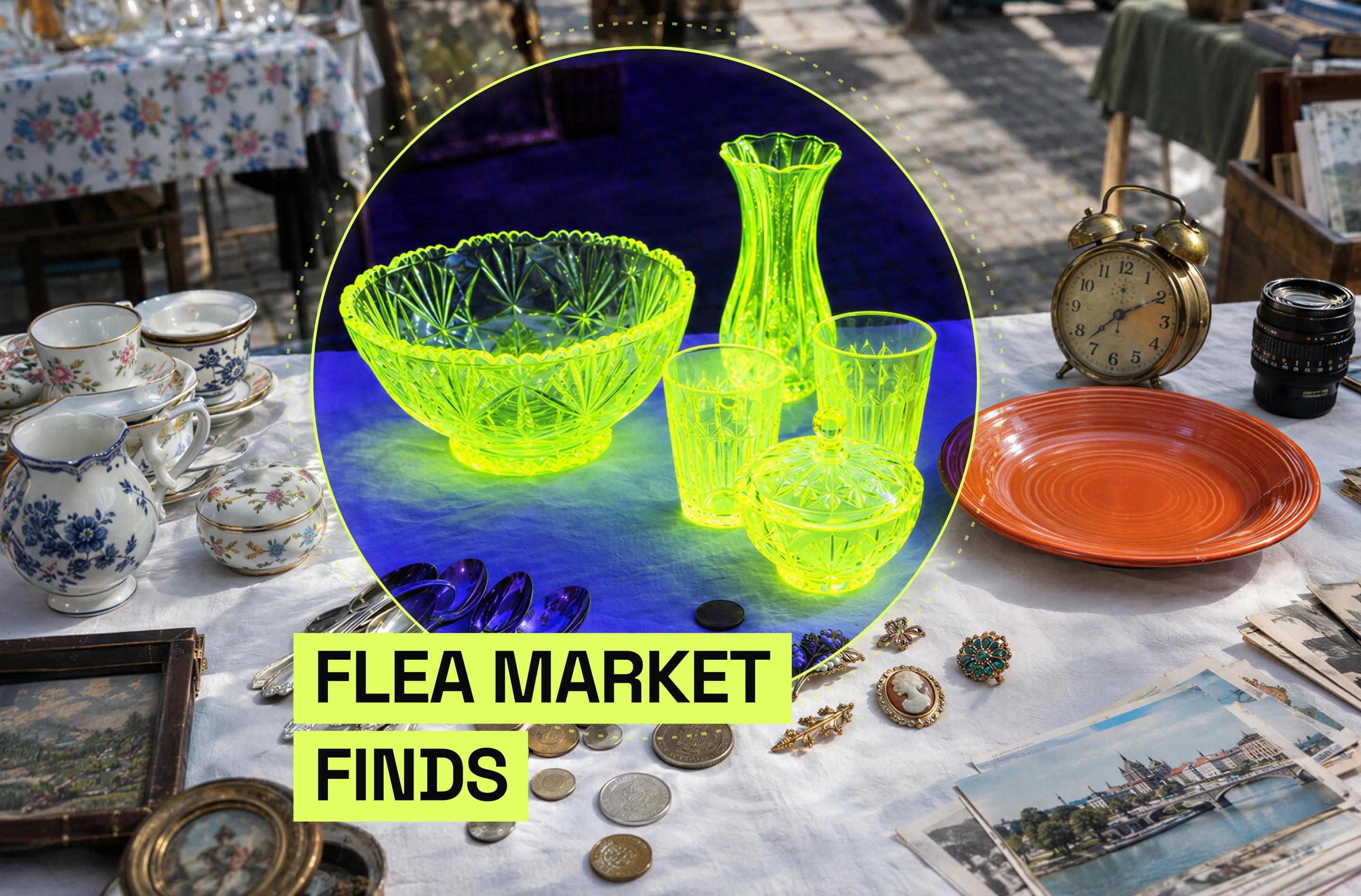
An old alarm clock and a bright orange plate might sit next to each other at a flea market. The clock might have a dial painted with radium so it could be read in the dark. The plate might owe its colour to a uranium glaze. A gamma reading can help you investigate an object, but it cannot tell you whether it is safe to handle or open. A quick measurement can give you a reason to look more closely at either object.
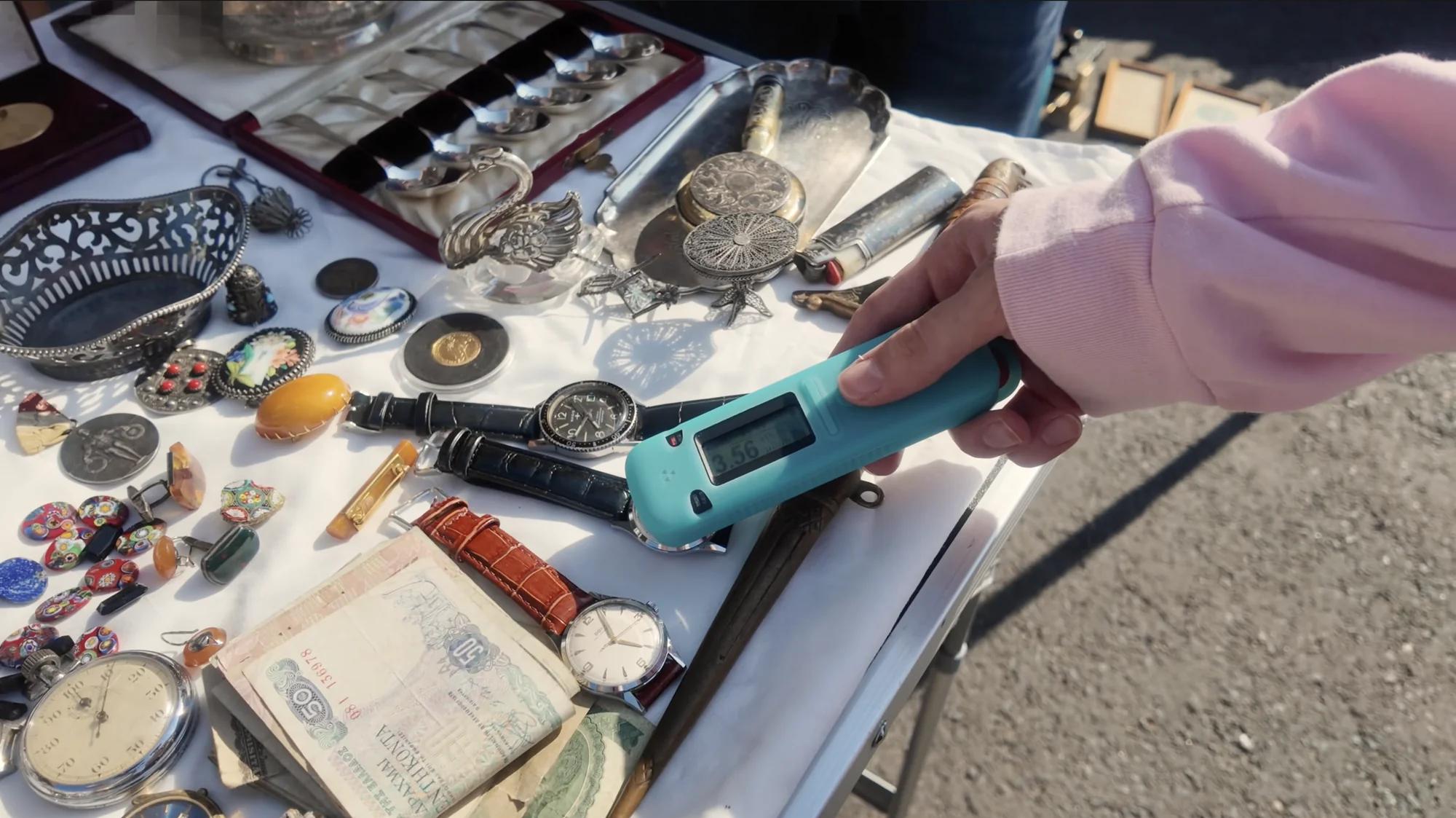
A flea market is a good place to start. Antique shops can give you more time to look up a maker’s mark, examine a lens or ask the seller where a piece came from.
Four things to look for
Clocks and watches with luminous dials
Look for older alarm clocks, wristwatches and pocket watches with painted numerals or hands. Some used radium paint. The glow can fade while the radium remains, so a dial that looks dull today can still give a reading. Check the maker, model and approximate age, especially if the dial may have been replaced. Measure an intact clock or watch with its case closed.
Uranium-glazed ceramics
Look through the older plates, bowls and decorative ceramics. Some vintage Fiestaware and other deep orange or red ceramics used uranium compounds in the glaze. A maker’s stamp on the underside can help you date the piece, and a measurement near the glaze gives you another clue. The US EPA advises keeping radioactive antique tableware for display.
Uranium glass
Look for yellow or green bowls, vases, glasses and small decorative pieces. Some uranium glass fluoresces bright green under UV light. Ask before using a UV torch in the shop and keep the beam on the object. Colour and fluorescence are useful clues. A radiation reading lets you check whether the piece produces a repeatable signal above the local background.
Vintage camera lenses
The camera table is worth a look, especially if the seller has older interchangeable lenses. Some makers added thorium to optical glass to get a high refractive index and low dispersion. The model and version are better clues than the colour of the glass alone. With permission, compare readings near the front and rear of the lens at a similar distance.
How to search with Radiacode
- Start in Search mode. Check the local background, then watch the live count-rate graph as you move past the stall. Radiacode’s sensitive scintillation detector helps you spot small changes. Pause and check whether a rise repeats.
- Bring a UV flashlight. Some uranium glass glows bright green under UV. Follow up with a radiation reading.
- Record a gamma spectrum. On a Radiacode 100 Series device, use the app to explore which isotopes might explain the reading.
Talk to the seller before you measure
A simple introduction gives the seller a chance to tell you something about the piece. Explain what you’re looking for and ask before bringing the detector close or moving anything on the table.
“I’m interested in how vintage glass was made. Would you mind if I held this detector near the bowl for a moment?”
If they’re curious, show them the screen and explain what changed compared with the reading nearby. Ask before taking photos or filming. If they’d prefer to leave the piece where it is, respect that and move on.
Try a few stops in the same city
A flea market might have a whole table of mixed glassware. A specialist watch or camera shop can help you narrow down an exact model. If you’re planning a day out, try both and leave time for the places you come across along the way. These trips through Madrid and London show how a search can take you from vintage markets and shops to museums and other stops around the city.
Collecting, storing and transporting radioactive antiques
Before taking a find home, consider its condition, where you’ll store it and what rules apply if you need to transport it. A quick Radiacode reading is only one part of that decision.
Keep clocks, watches and instruments that may contain radium paint intact and closed. If you notice a cracked dial cover or loose paint at a stall, leave the item undisturbed. If you already own a damaged item, ask your local radiation protection authority for advice.
Rules for owning, selling and transporting radioactive antiques vary by country and by item. Before shipping one or taking it across a border, check the rules in the countries involved and confirm any restrictions with your carrier.
See what other people have found
Looking for ideas for your next outing? Browse finds on Radiaverse to see the objects, readings and spectra other people have shared. If you post a find of your own, a photo of the maker’s mark and a note on how you measured it can help others recognise a similar piece. Explore Radiaverse.