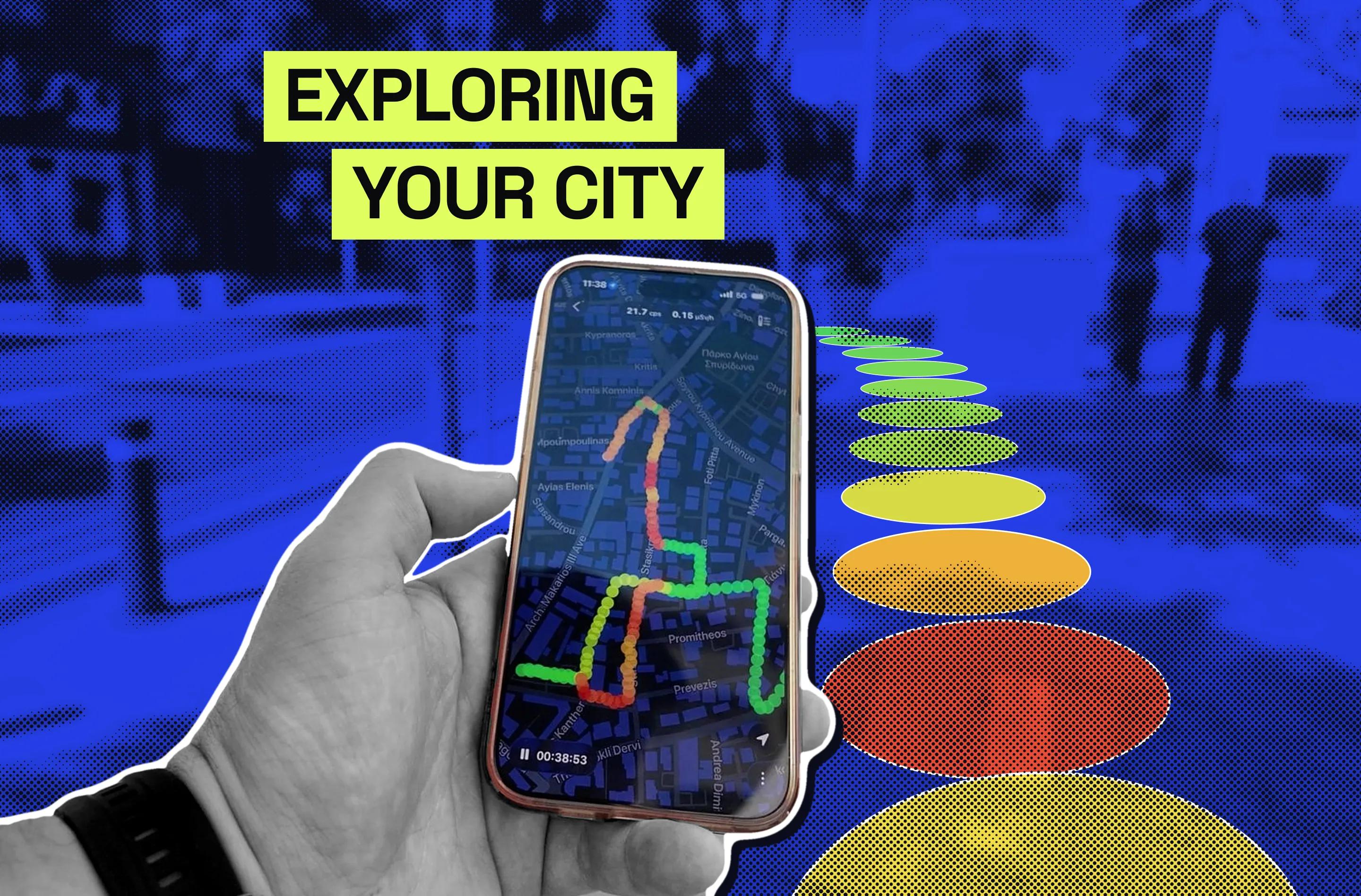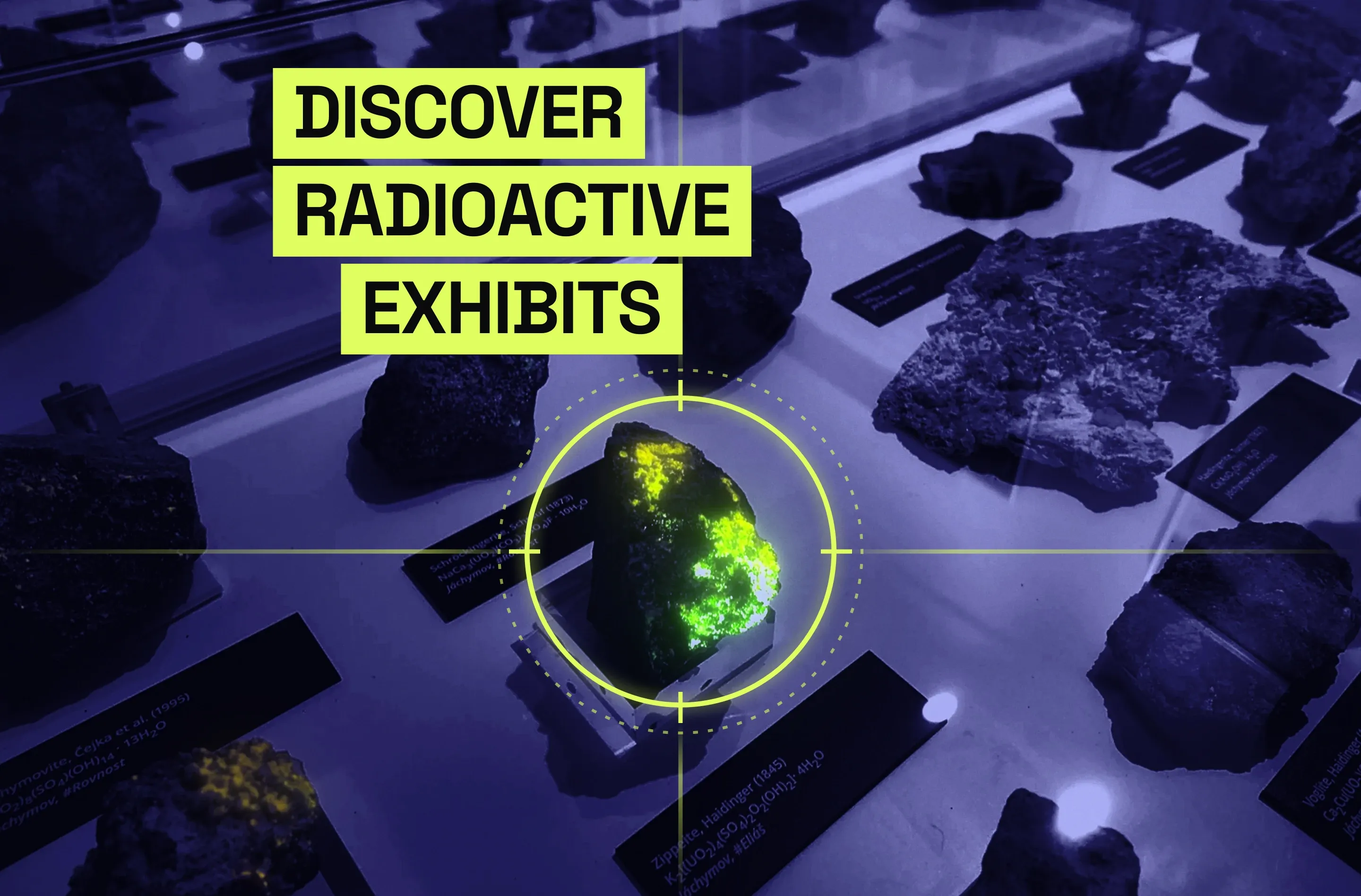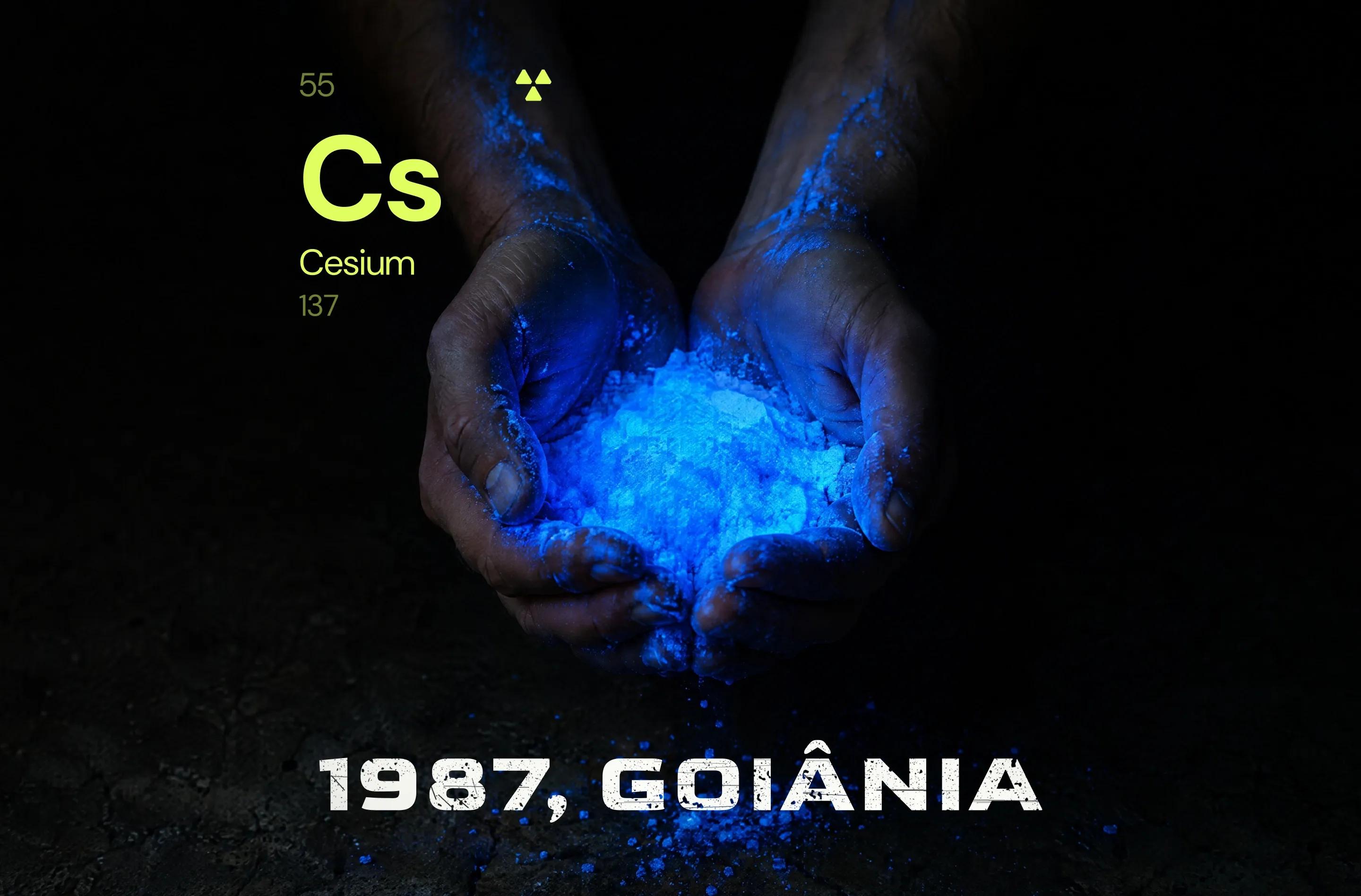
A street can look completely ordinary while carrying an extraordinary history. In Goiânia, Brazil, Pedro Augusto brought a Radiacode 110 to places linked to the radiological accident of 1987. He wanted to see whether it could still pick up a trace of the cesium-137 that once passed through them.
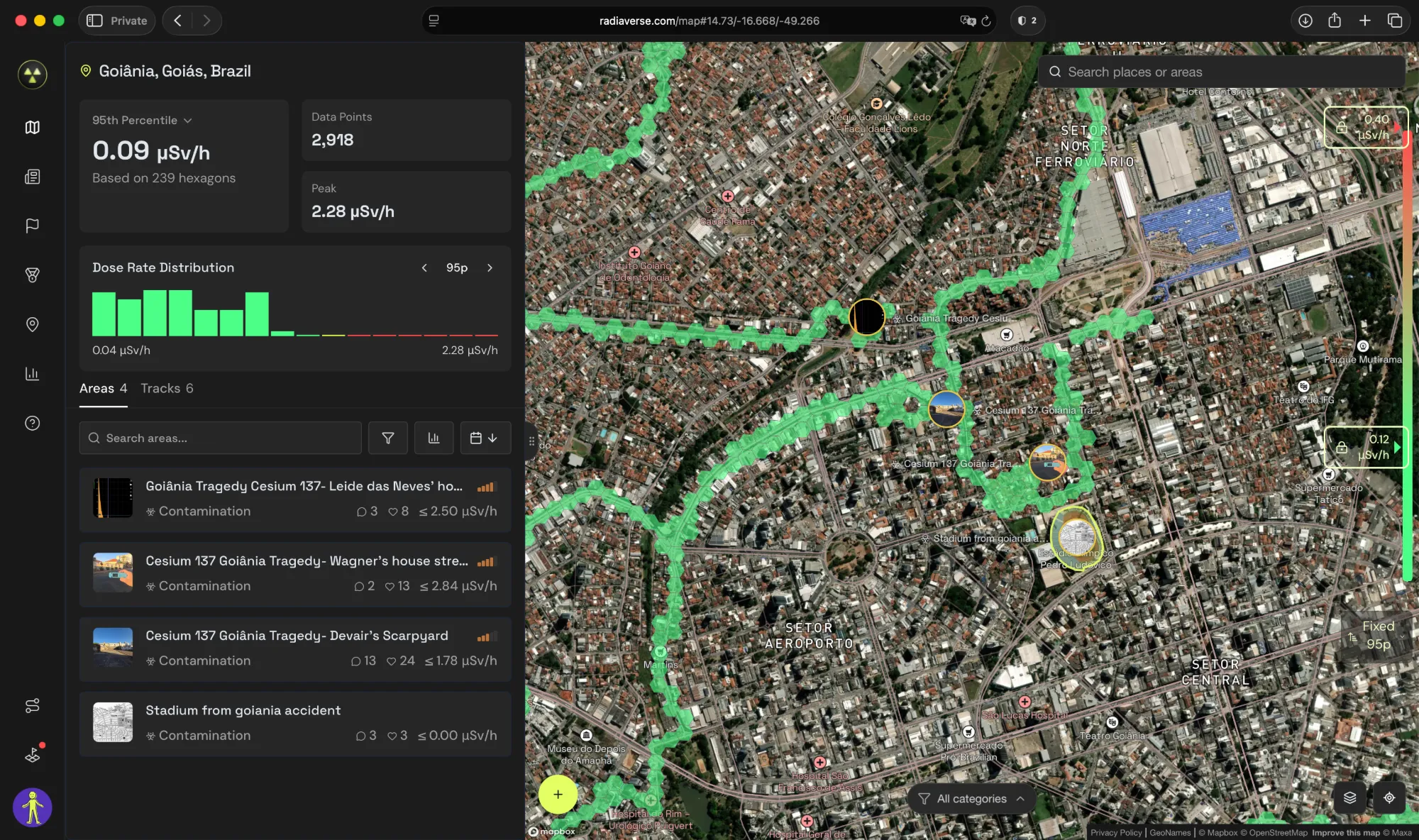
The accident is also the subject of Netflix's 2026 drama Radioactive Emergency. Pedro's fieldwork takes the story from the screen to three real locations in Goiânia.
The answer came from more than a number on the screen. At particular surfaces, the detector responded differently from the surrounding area. Pedro then recorded gamma spectra to investigate what was producing the signal. His field videos and three locations shared on Radiaverse let us follow the investigation.
The story behind the measurements
In September 1987, a source containing cesium-137 was removed from a radiotherapy machine left at a former clinic. After the source was opened, radioactive material travelled through a scrapyard and several homes. People came into contact with it without knowing the danger. Four people died, many more were affected, and an extensive cleanup followed.
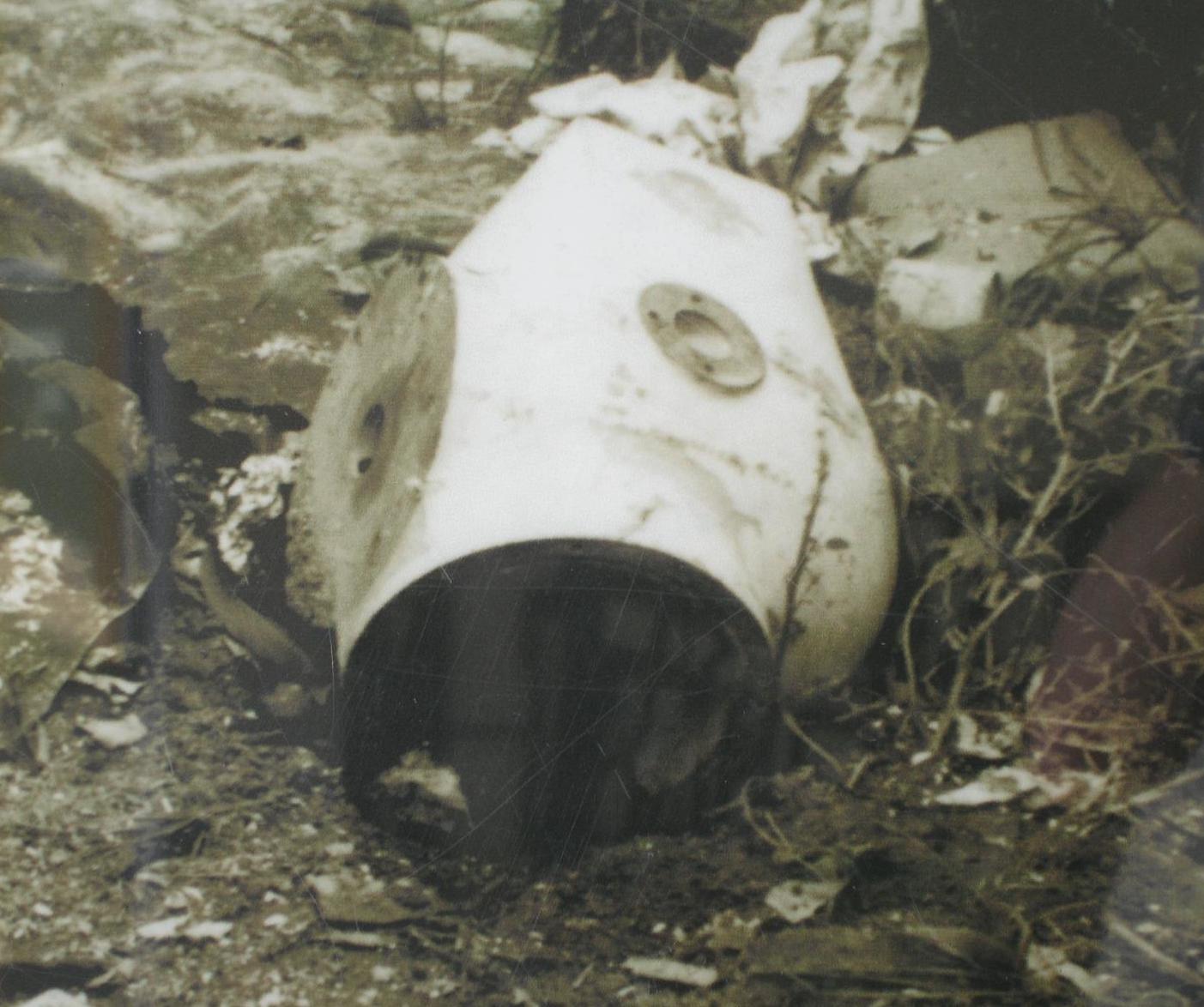
The cesium-137 source involved in the 1987 Goiânia accident, photographed in 2007. Photo: IAEA Imagebank / CC BY 2.0.
The IAEA's account documents what happened and the response that followed. Today, the places Pedro visited are part of a changing city, as well as part of its history. His project asks a focused question: what can still be observed with a sensitive detector nearly four decades later?
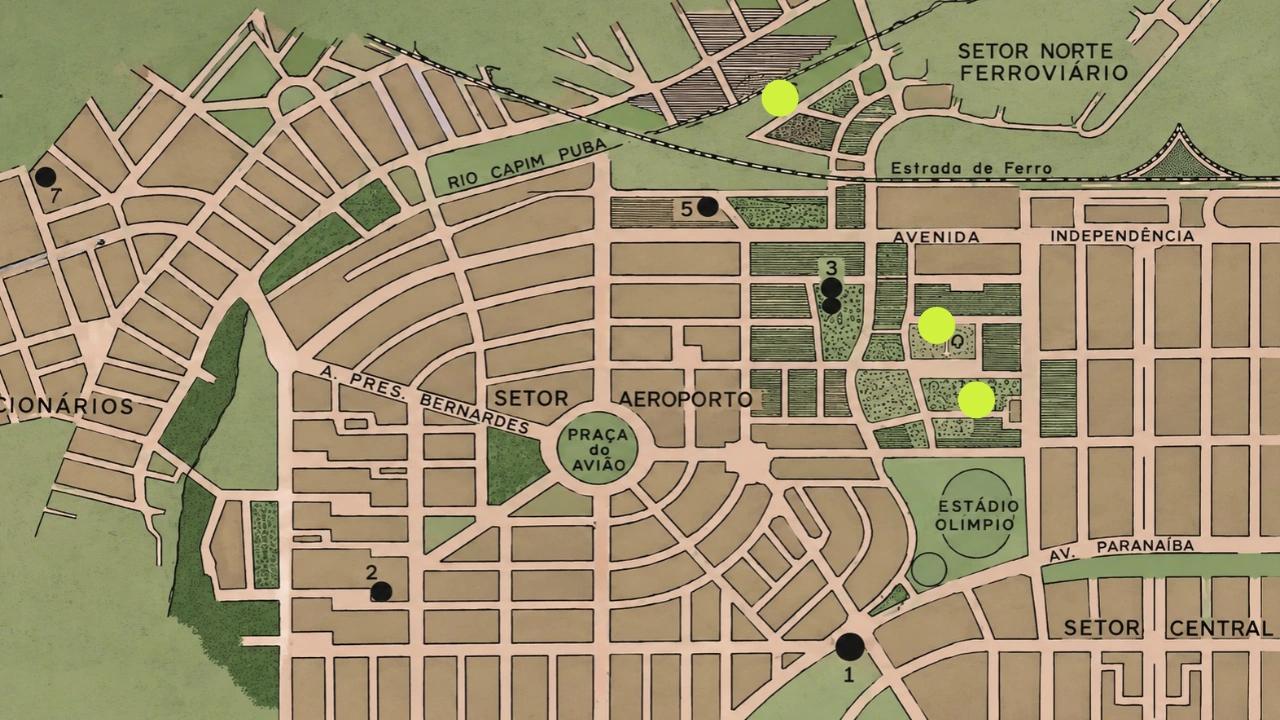
Map of contaminated sites in Goiânia. Yellow dots mark the locations already explored with Radiacode.
What is cesium-137?
Cesium-137, or Cs-137, is a radioactive isotope produced by nuclear fission. Unlike uranium or thorium, it is not a naturally occurring component of local geology. Its half-life is about 30 years, meaning that half of a given amount decays over that period.
As Cs-137 decays, it produces barium-137m, which then emits a gamma ray with an energy of about 662 keV. That energy appears as a recognizable peak in a gamma spectrum. It is one reason Radiacode 110 can tell us more than a simple rise in the radiation reading.
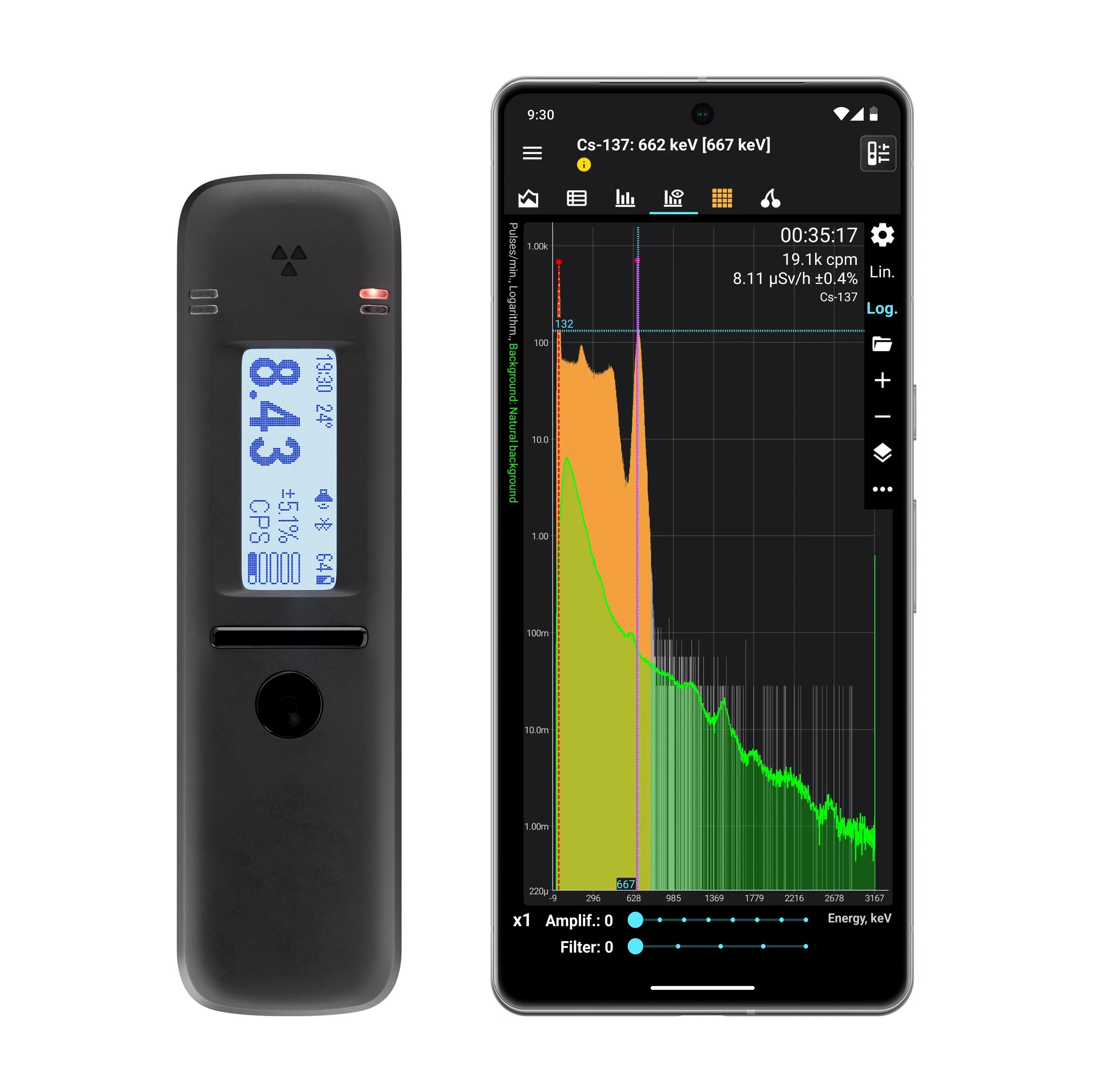
A long half-life also means Cs-137 can remain detectable for decades. Whether it can be measured at a particular place depends on what material was there, what was removed and how the detector is used. Those are questions to explore on the ground.
Devair's former scrapyard
One of Pedro's stops was the site of Devair Alves Ferreira's former scrapyard. It played a central role in the accident after the radiotherapy source arrived there in 1987.
Pedro moved the Radiacode 110 across exposed soil and gaps around the concrete. The response varied from place to place: some spots stood out more clearly when the detector was brought close. He recorded a spectrum with a peak near 662 keV, consistent with cesium-137.
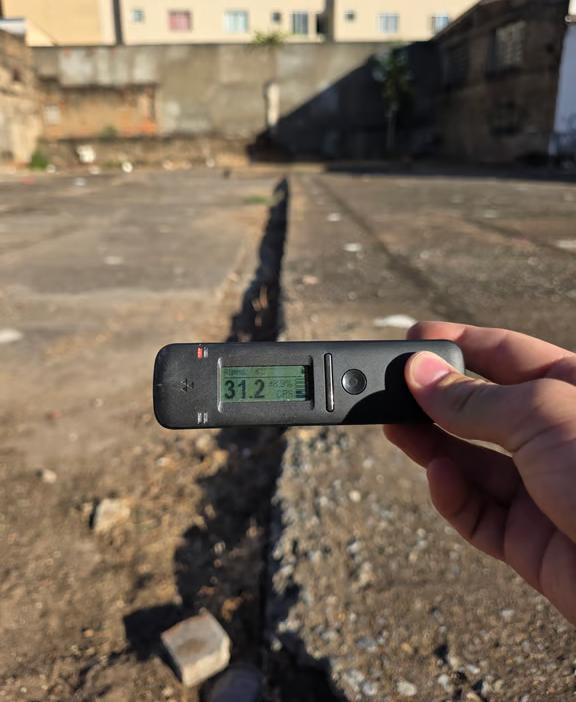
That is the interesting part of the fieldwork. The detector helped him find a small, specific signal, while the spectrum gave it context. The observation is shared at Devair's former scrapyard on Radiaverse.
Wagner's former home on Rua 57
Pedro also visited the site of Wagner's former home on Rua 57, another location connected to the source's early journey through Goiânia.
He first checked the accessible area with the detector held above the ground. As he continued searching near the asphalt and other surfaces, he found a more distinct local response. A spectrum from this location also showed the characteristic feature near 662 keV.
The change with position is a useful reminder of how this sort of exploration works: where and how you hold a detector matters. A close reading at one surface is a finding about that spot, rather than a description of the whole street. See Wagner's former home on Radiaverse.
Leide das Neves' former home
The third location is the former home of Leide das Neves Ferreira, a six-year-old who died as a result of the 1987 accident. Radioactive material brought into the family home made this one of the most painful places in the story.
Pedro recorded elevated readings here as well and documented the location at Leide's former home on Radiaverse. Together with the scrapyard and Rua 57, this point helps show how the material moved between places and people, and how a present-day measurement can lead us back to their stories.
What Radiacode adds to the story
Pedro's investigation shows the value of having dose-rate readings and a spectrum in the same Radiacode. He could follow changes across nearby surfaces, compare them with a local reference, and look for the energy signature associated with cesium-137. The Radiacode app helps display the measurements and spectra; Radiaverse gives the observations a place on the map where others can explore them.
These are individual field observations, shaped by distance and the exact surface measured. Their value is in making a specific question visible and shareable: can we still detect a recognizable signal here? At the locations Pedro examined, his Radiacode 110 helped him find and document one.
Different accounts of the accident describe roughly ten locations connected to the movement of the source and radioactive material. So far, three have been explored with Radiacode and shared on Radiaverse. As more Radiacode users make and share measurements, other places from this history may find their way onto the map too.