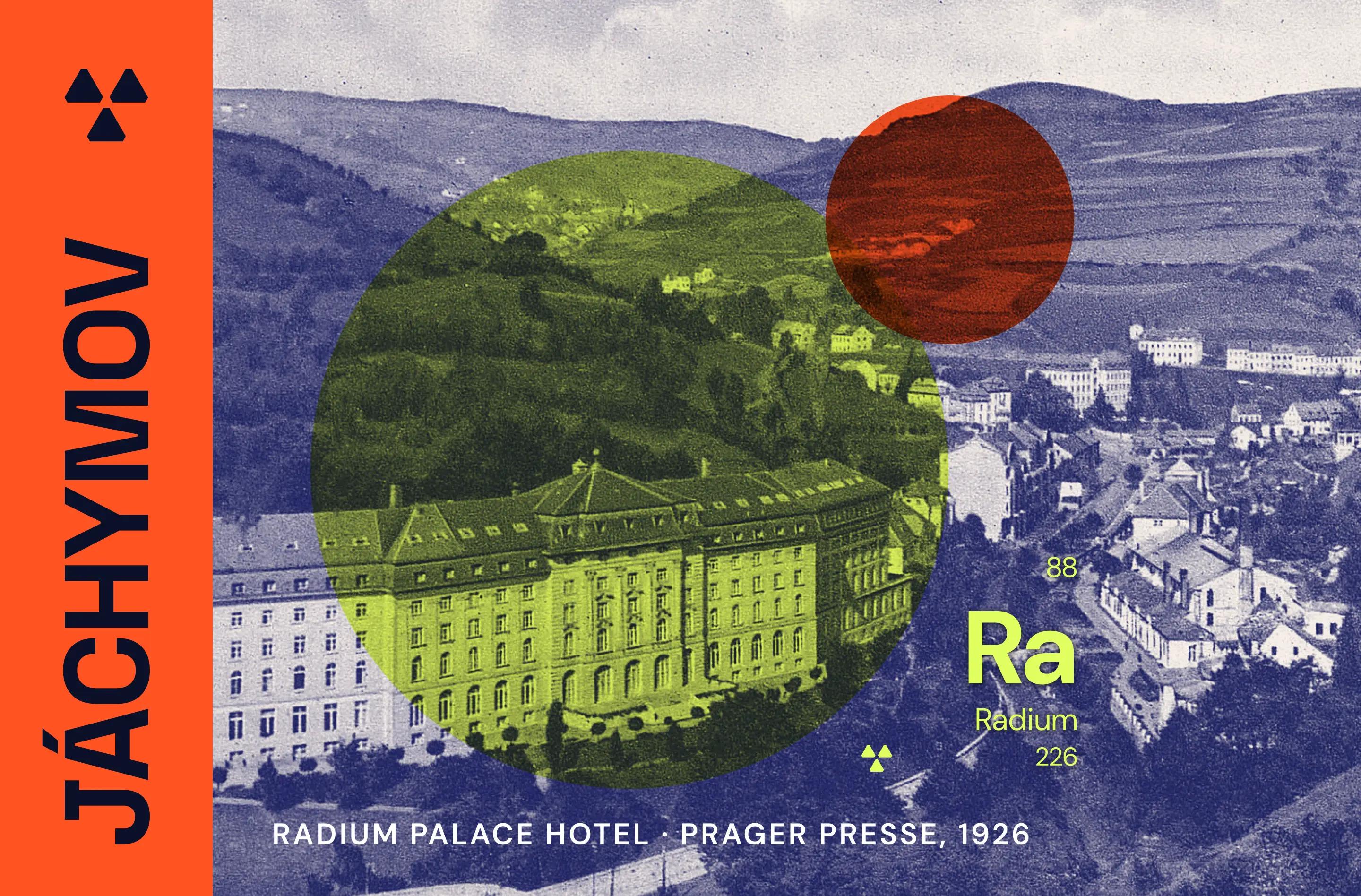
Located in the Ore Mountains of Czechia, near the German border, the town became associated with radiation because of what lies beneath it. Its mineral deposits shaped centuries of mining, supplied material for scientific research and continue to influence its identity today.
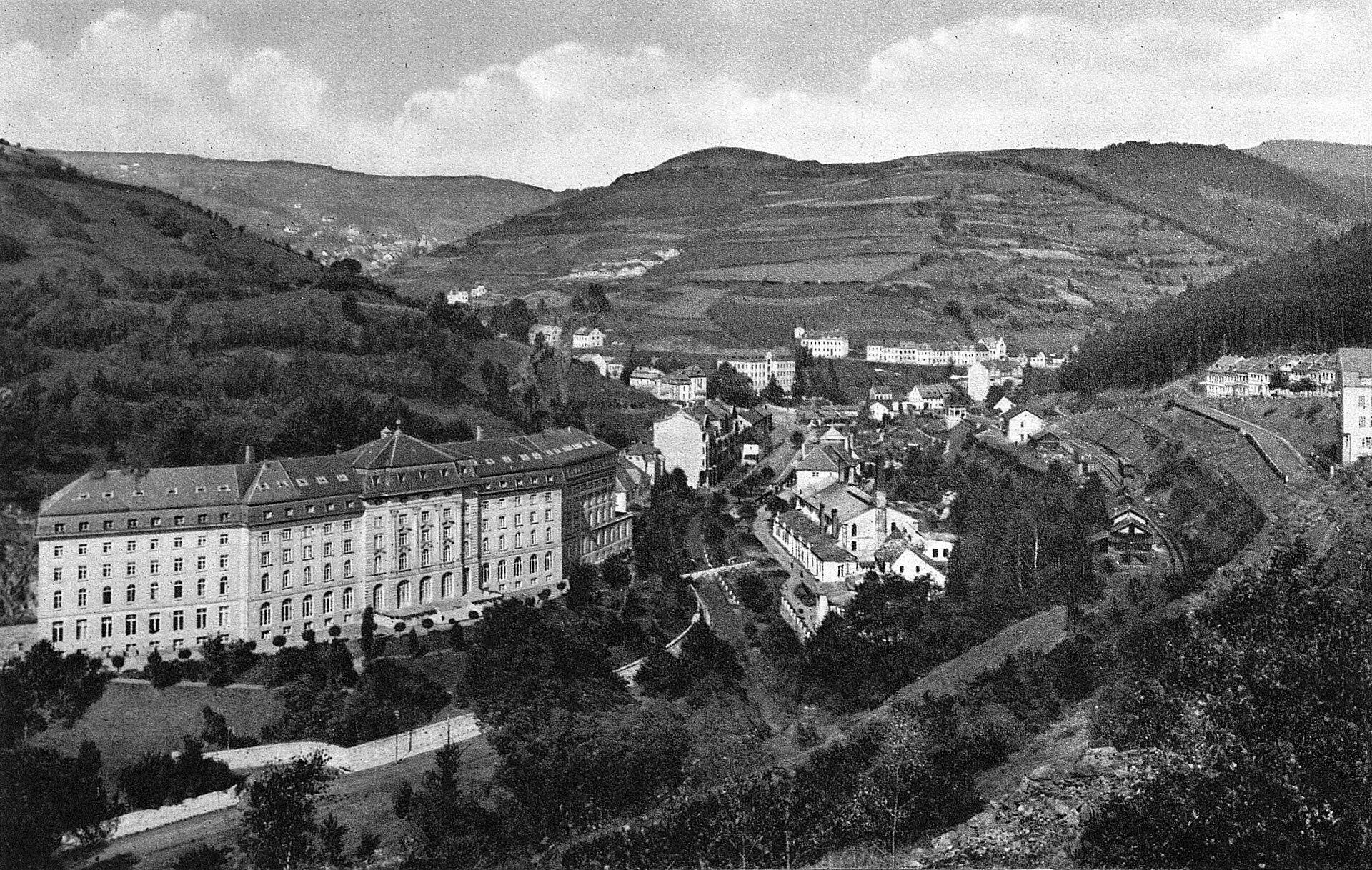
Radium Palace Hotel (Prager Presse, 1926), Wikimedia
But what does it mean to call Jáchymov “radioactive”? The answer begins with geology—and becomes more interesting when you separate the rocks, the mining legacy and the radon.
The radioactivity was here before the mines
Jáchymov’s uranium was not created by mining or nuclear research. It occurs naturally in the local mineral deposits.
The district contains a network of mineralised veins: fractures in rock that were filled by mineral-bearing fluids during geological processes. These veins contain ores of several metals, including silver, cobalt, nickel, bismuth and uranium. Their formation and distribution explain why valuable minerals were concentrated in particular places rather than spread evenly through the landscape.
One important uranium mineral is uraninite, historically known in its massive form as pitchblende. Its uranium atoms undergo radioactive decay, producing other elements over time.
That decay does not happen in a single step. Uranium-238 begins a long sequence that includes radium-226 and radon-222 before eventually reaching stable lead-206. Several members of this chain emit radiation of their own. A uranium-bearing rock can therefore contain a whole family of radioactive elements, rather than uranium alone.
Mining exposed and moved these materials. It changed where people encountered them, but their radioactivity had a natural origin.
From silver mining to uranium colours
Jáchymov was founded in 1516 following the discovery of rich silver deposits. Its early prosperity came from silver, long before anyone understood radioactivity.
As the district developed, miners worked different ores and the economic importance of its minerals changed. Uranium eventually became valuable for producing colours used in glass and ceramics. Later, the same mining district supplied material for radium extraction and, ultimately, the nuclear industry.
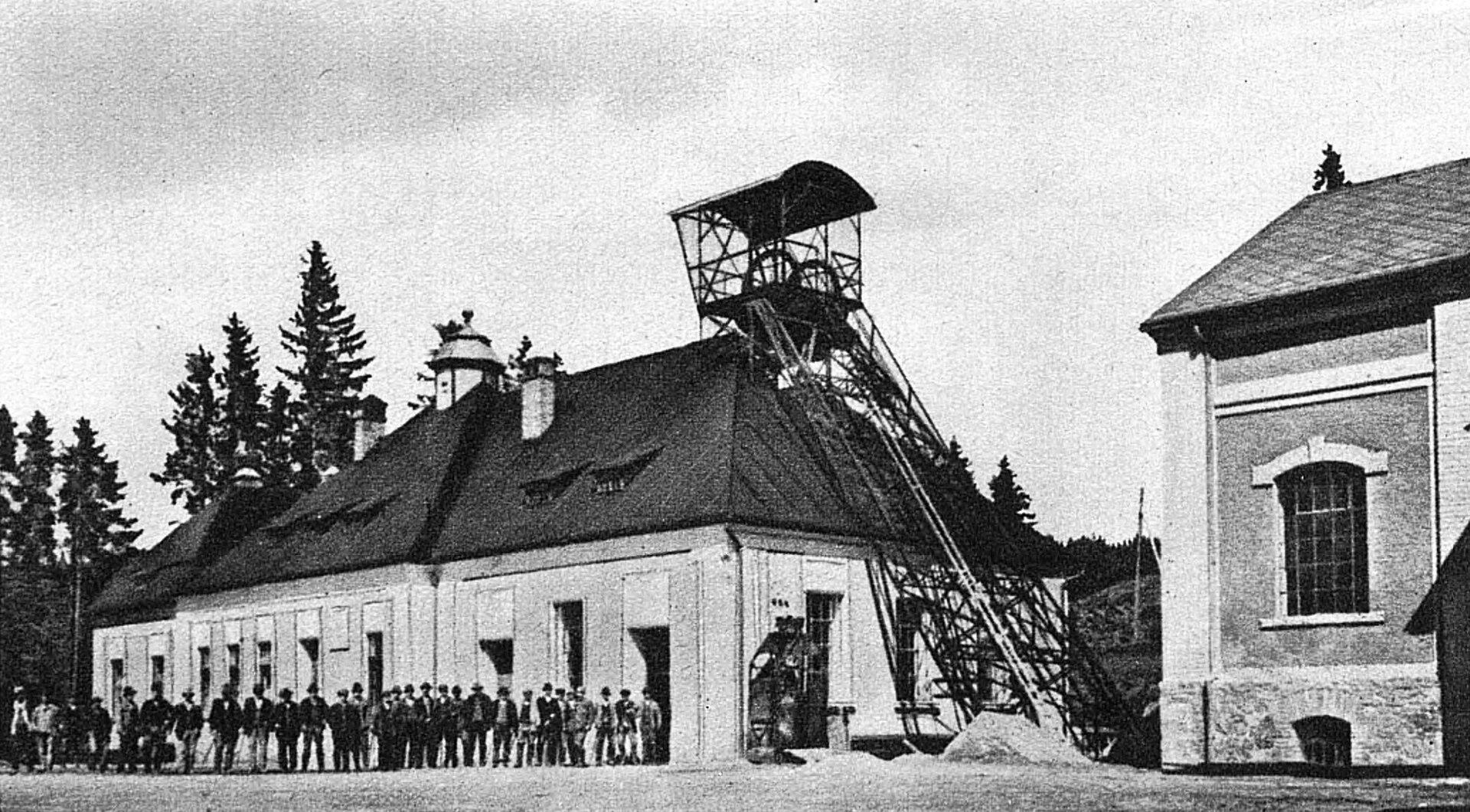
The Werner mine shaft in Jáchymov, used to extract uranium ore for uranium and radium production, 1926 (Source: Wikimedia)
This is one of the most interesting parts of Jáchymov’s story: a mineral’s value depends on what people know how to do with it.
The Svornost mine illustrates that transition. Founded in 1518, it was initially associated with silver and other metal ores. In the nineteenth century, uranium mining became important as demand grew for uranium-based colourants. Today, its continuing role is connected with the collection of radon-rich water for the town’s spas.
How Jáchymov became connected with the Curies
Jáchymov appears in older scientific accounts under its German name, Joachimsthal.
The connection with Marie and Pierre Curie came through uranium ore and the residues left after processing it. Marie Curie recognised that pitchblende could be more radioactive than its uranium content alone would explain. This suggested that other, highly radioactive substances were present.
The Curies announced the discoveries of polonium and radium in 1898. Processing residues from Joachimsthal subsequently became an important raw material for their work: extracting uranium had left valuable radioactive constituents behind. Marie Curie described using these residues in her 1911 Nobel lecture.
The distinction matters: the research took place in Paris; Jáchymov supplied material connected with it. The town’s role was geological and industrial, linking a Bohemian mining district with a major scientific breakthrough.
Where does the radon come from?
Radon connects the geology with the water beneath the town.
Radon-222 is a radioactive gas produced when radium-226 decays. Radium-226 is itself part of the uranium-238 decay chain. Unlike uranium and radium, which are metals, radon can move as a gas and can dissolve in groundwater.
Water circulating through fractures in the rock can acquire radon. In Jáchymov, the underground workings provide access to radon-rich water sources.
The spa operator describes collecting water from springs around 500 metres below the surface in the Svornost mine and transporting it through pipelines to the spa facilities. The mine therefore remains connected with the town’s present-day life, even though uranium extraction has ended.
Why did radon spas develop here?
Jáchymov’s radon-bathing tradition began in 1906. The early operation was small: the spa’s historical account describes two baths supplied with mine water, initially transported in containers before pipelines were introduced.
The idea emerged during a period of intense interest in radioactivity and its possible medical applications. Over time, radon bathing became a defining feature of the town.
That history should be distinguished from a general claim that radiation is beneficial. Radon is a recognised health hazard when inhaled: its decay products can deposit in the airways, and long-term exposure increases lung cancer risk. Outdoors it usually disperses, while enclosed, poorly ventilated spaces can allow it to accumulate.
A spa treatment is a specific medical practice, not a reason to seek uncontrolled radon exposure. Decisions about treatment belong with qualified healthcare professionals.
Does “radioactive town” mean every street has high readings?
No single description captures the radiation environment of an entire town.
A uranium-bearing mineral, a former mining area, groundwater and indoor air involve different sources and different measurement questions. A reading taken close to a specimen cannot be applied to a whole street. A gamma measurement outdoors cannot establish the radon concentration inside a building.
Mining also redistributed material, so the landscape reflects both natural geology and human activity. Understanding an individual location requires evidence about that location.
For a visitor, the useful questions are more specific:
- Does the reading differ from the local background?
- Is the increase repeatable?
- Does it become stronger near a particular object or material?
- What does the site’s history suggest?
- What can the measurement actually establish?
This approach turns a dramatic label into something you can investigate.
What can you explore with Radiacode?
Radiacode can help connect the town’s history with observable changes in radiation levels.
Start with the museum
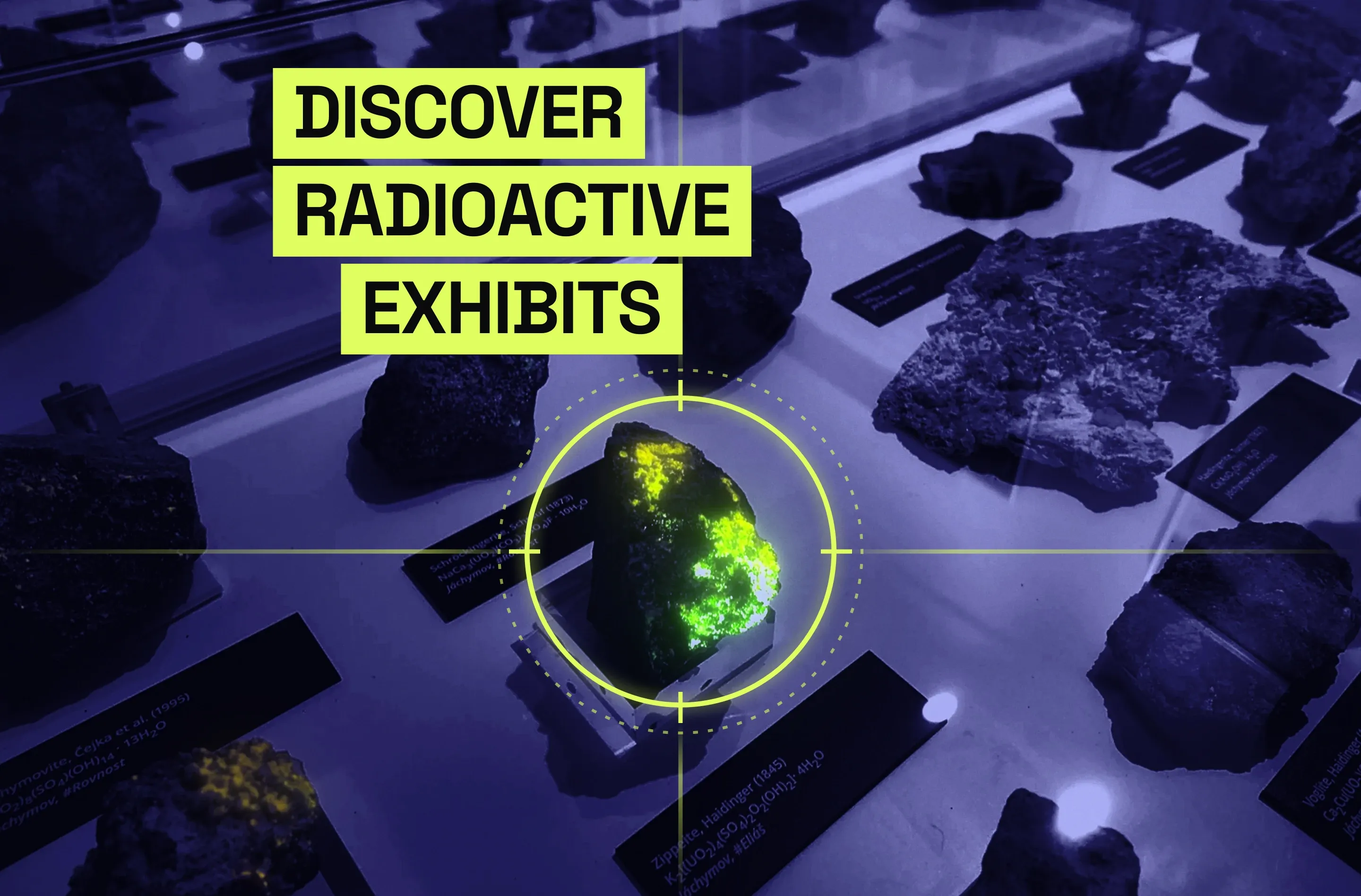
The Muzeum Jáchymov — Královská mincovna, housed in the former Royal Mint, provides an introduction to the region’s mineral wealth and history. Its permanent exhibition covers local minerals, the development of the spa and the history of uranium mining.
Compare accessible locations
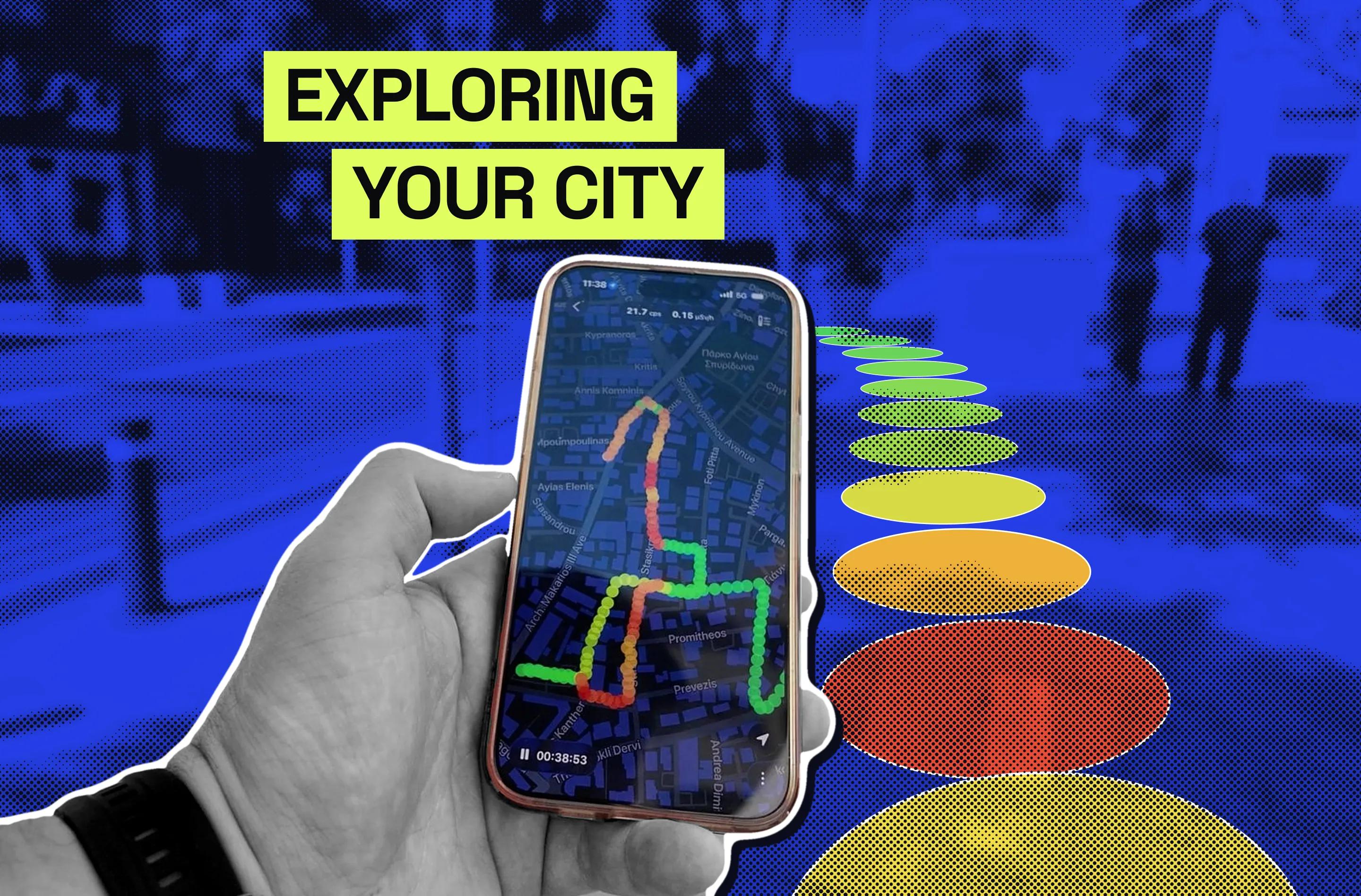
On public routes and at authorised visitor sites, begin by observing the local background. Move slowly, pause when readings change and repeat the approach.
Record the location and measurement conditions. Distance matters, and a brief fluctuation should not be treated as a confirmed finding.
Historical sites are places to understand, not an invitation to enter closed workings. Stay on permitted routes and respect barriers, property boundaries and memorials.
Investigate a spectrum
With a Radiacode model that supports gamma spectroscopy, collect a separate spectrum at an interesting location and compare it with a representative background spectrum.
The spectrum can help you reveal which radioisotopes might be responsible for the gamma radiation you are detecting. In natural uranium-bearing materials, some features may come from uranium’s decay products.
Treat the interpretation as a question to investigate. Multiple sources, shielding and limited measurement time can complicate the result.
Understand the radon limitation
Radiacode does not measure radon concentration in air.
Its spectrometer models can detect gamma radiation from certain radon decay products, but those products can also be present in rocks, soil and building materials. Their spectral features alone do not establish how much radon gas is in the surrounding air.
With a Radiacode and a simple air-sampling setup, you can investigate radon’s radioactive decay products yourself.
Drawing air through a suitable particle filter can collect airborne particles carrying these decay products. Measuring the filter with Radiacode may reveal characteristic gamma emissions from lead-214 and bismuth-214—a practical way to explore the decay chain behind Jáchymov’s radon story.
Plan your visit and share what you learn
Before travelling, check current museum information, guided-tour availability and access rules. Use Radiaverse to explore community findings and plan observations of your own.
Jáchymov’s radioactivity connects several stories: minerals formed underground, ores brought to the surface, scientific discoveries and water still used by the spas.
Exploring those connections makes a visit more than a search for elevated readings. It becomes a way to understand how geology shaped a town—and how people’s relationship with the same materials changed over centuries.